Author · Professor · Counselor · Minister

Old truths.
Living questions.

Books and conversations for people willing to look again—at faith, history, one another, and themselves.

Watch

A brief message from Rick—shared here for readers, students, and friends.

Poetry on YouTube

Rick Farmer Poems

Listen to Rick read his poetry on his YouTube channel.

Visit the poetry channel ↗

From a Friend

A work by Dr. Nabil Jabbour.

Written and produced by my good friend, Dr. Nabil Jabbour, this is a work I’m pleased to share with you.

— Dr. Rick Farmer

Explore Dr. Jabbour’s work ↗

A thought worth carrying

“God is who He says He is, and God can do what He says He can do.”

— a phrase from an old friend, remembered in the book

Dr. Rick Farmer wearing a blue shirt

Meet Rick

Counselor’s ear.
Teacher’s questions.
Writer’s curiosity.

Rick Farmer has spent a lifetime where ideas become personal: in counseling rooms, pulpits, classrooms, and pages. He writes the same way he teaches—not at people, but with them.

D.Min., Pastoral Care & CounselingM.Div.M.A., Counseling Psychology

The books

Begin with a doctor
from the first century.

Christian Book Award · Gold
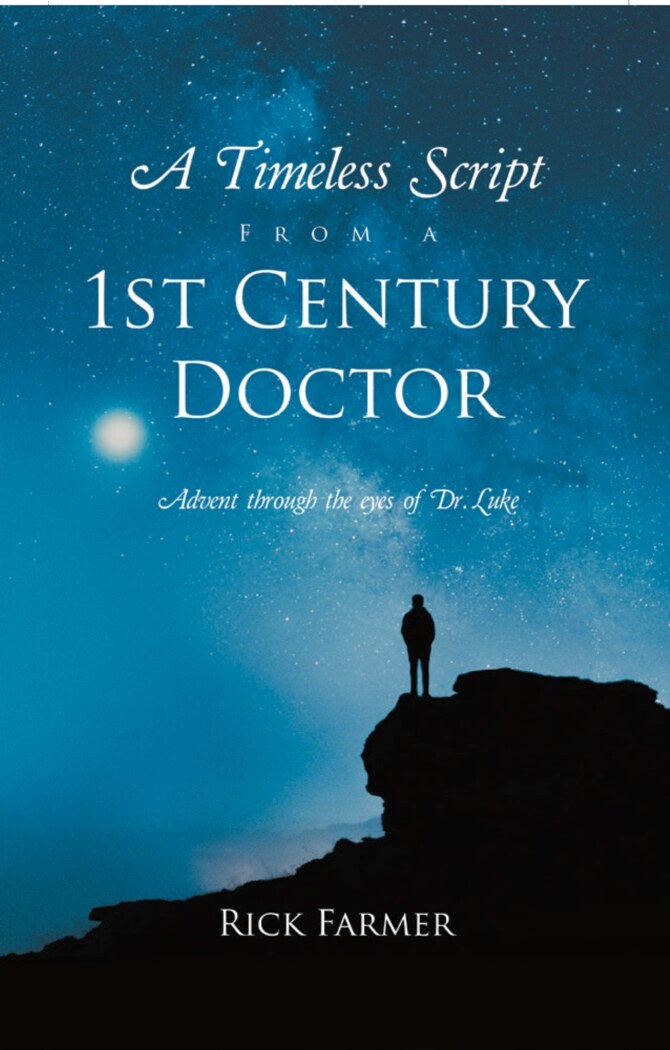
Cover of A Timeless Script from a 1st Century Doctor by Rick Farmer

Available now

A Timeless Script from a 1st Century Doctor

Luke was a doctor, historian, investigator—and an eyewitness we can trust. This book meets him on his own ground and follows the Advent story with an eye for evidence, humanity, and wonder.

Christian Book Award · GoldAuthor Shout Book Award
Find it on Amazon →

Now being written

3 BC
through
Gen Z

Ancient revelation meets history, science, and the questions of a new generation.

What readers are saying

Reviews belong
in the conversation.

A glimpse of the response—from readers, educators, and professional reviewers. The complete reviews now have a page of their own.

★★★★★
““When we read such testimony, we are left with a choice—believe or not believe, embrace or dismiss. But honest consideration must be our goal.””

Michael RadonProfessional book reviewer

★★★★★
“A Timeless Script from a 1st Century Doctor is a thoughtful and engaging examination of Luke’s Gospel that successfully integrates historical context, theological reflection, and contemporary application. Rick Farmer writes with the se…”

An Old FriendEditorial review

Read every complete review →

Amazon reviews · professional criticism · WestBow endorsements

In the classroom

Never lecture past the human being in the room.

Psychology, counseling, religion, history—the subject changes. The method does not: ask a better question, invite an honest answer, and make the idea memorable.

Adjunct Professor · Flagler College

Hear from former students →
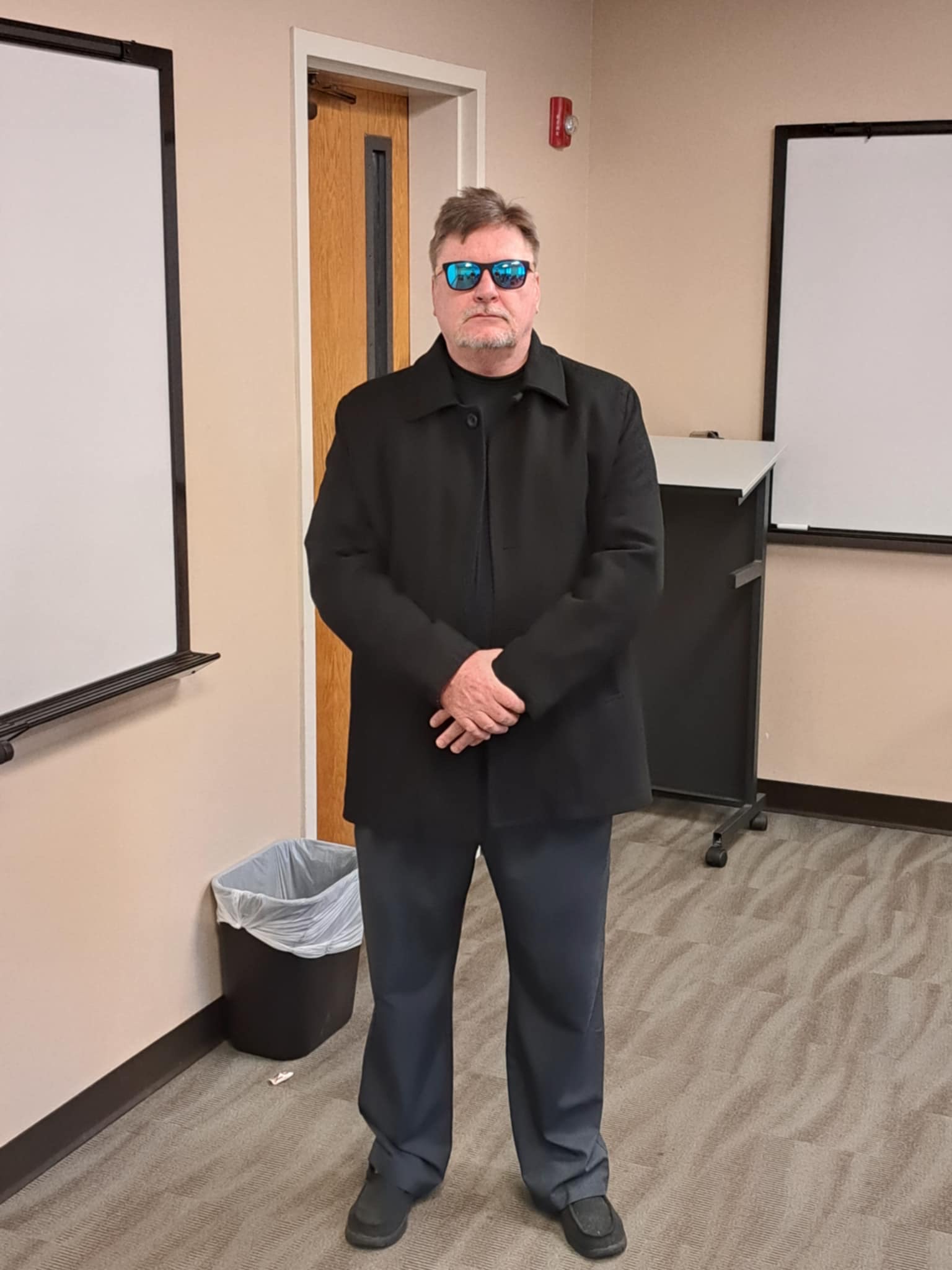
Dr. Rick Farmer in a classroom wearing a black coat and sunglasses
Sometimes a memorable lesson requires a little Matrix energy.
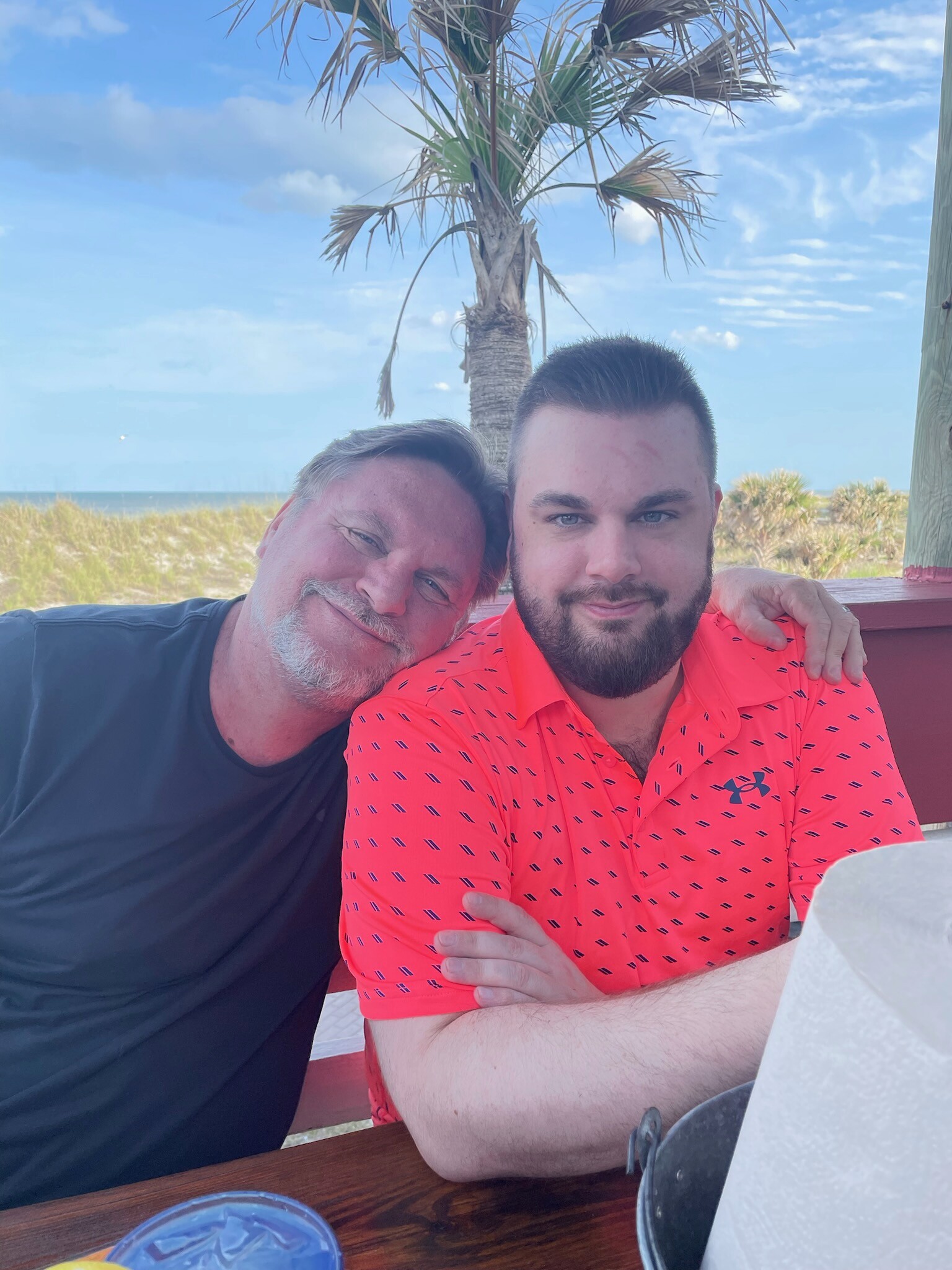
Rick Farmer with his son at the beach
Rick and his son
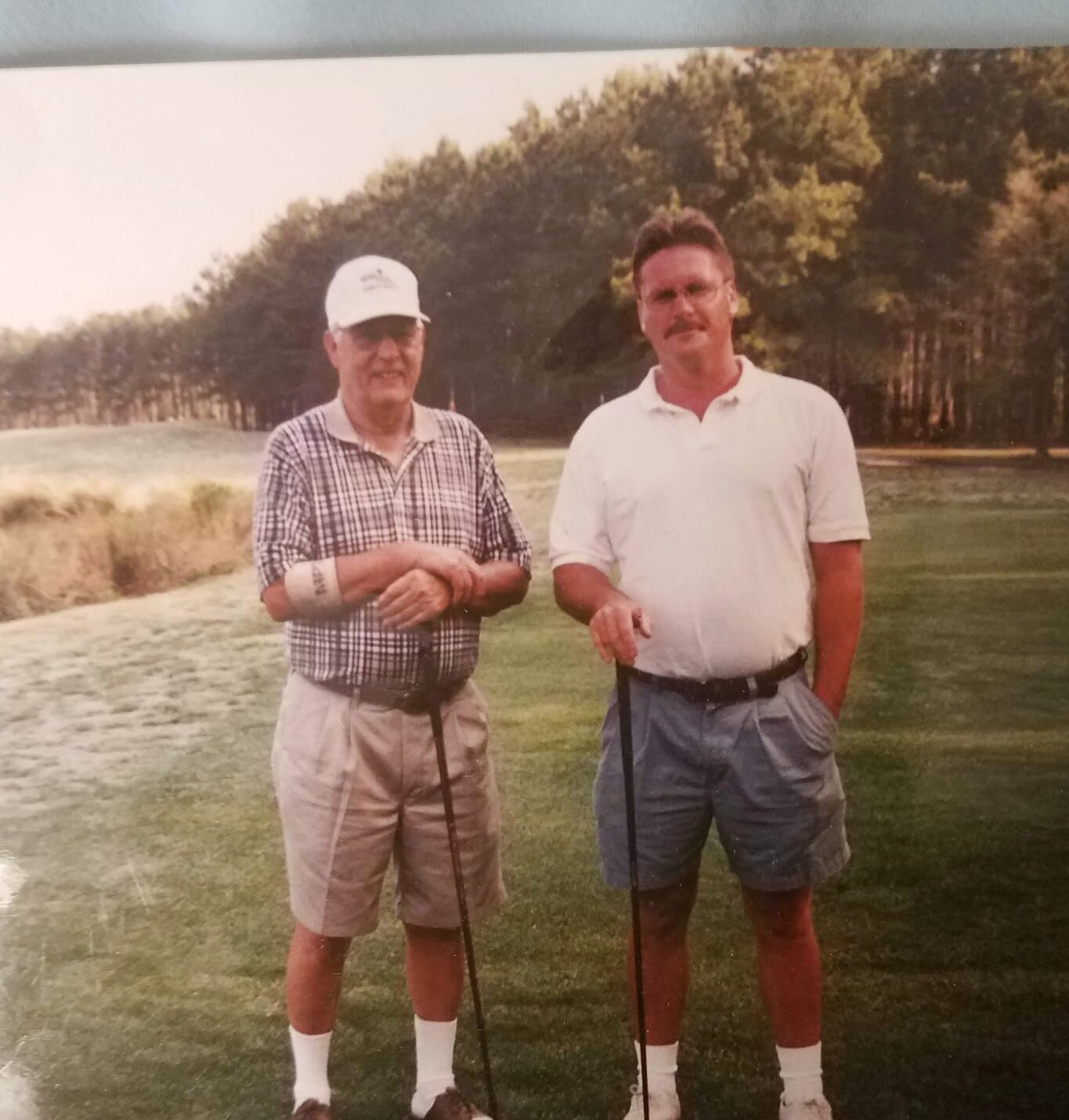
Rick Farmer golfing with his father-in-law
Rick and his father-in-law

Across generations

Inheritance is not repetition.

Faith and wisdom are carried forward by people willing to explore them together, test them through honest conversation, and give the next generation room to find its own voice.

Faith · Family · Learning · Legacy

Field notes

Ideas still
underlined.

Notes from the crossroads of faith, history, science, teaching—and whatever question refuses to leave quietly.

Illustrated portrait of Dr. Rick Farmer
Thoughts from Dr. Rick
Faith & Divine Encounter · October 18, 2026

Thinking About Hope…

What kind of hope would you prefer from the Divine—the best dream you have ever had, or something so beautiful that you cannot yet imagine it?

Read Thinking About Hope →
Church & Culture

Read at Your Own Risk: Church People vs. Christ People

After more than 30 years within the institutional church, Rick Farmer reflects on the conflict between protecting tradition and living the Gospel.

Read the full article

Allow me to speak about a community I understand well—the institutional church. Having served within her for over 30 years, I have watched firsthand the worldview conflict that has influenced the way we do church.

Our conflicting theological identity is one of the major reasons young people in America are running away from our churches at an alarming rate. Too many of our people, at least within the Baptist Tradition (I suspect within other traditions as well), have chosen to be church people rather than “Christ People.” “Church people” and “Christ people” have a completely different take on Advent.

The following is taken from this author’s journal notes.

From the Author’s Journal

I write amid Quarantine. I wonder what God is doing among us as we trust our representatives to come forward with a plan to curb the spread of Covid-19 while somehow dealing with the economic crisis which has already begun.

It is sad when we realize we are trusting a Congress that somehow forgot they were elected to serve the people’s needs. Especially when we realize they often cannot agree on even the most basic priorities in a time of dire crisis. Although it leads to tremendous frustration, it also causes me to ponder the basic nature of human beings.

We seldom place the needs of others above our own. We seldom make our neighbor our priority, especially if this might cost us something we are attached to. And our ideologies often get elevated over genuine human need. People are dying around us, will soon be starving and homeless around us, and all we have to offer are statistics, debates, and a thirst for power.

For more than 30 years I have watched the same mentality as a Pastor in a mainline denomination. This crisis has highlighted for me the crisis which exists in congregations around America. You see, a virus is invisible, internal, and often very lethal. Much of the time we are oblivious to the cure and have no desire to work on a vaccine, at least in the church.

We would rather die waving the flag of Tradition than bring life to those in need. We would rather preserve the King James Bible, argue about how much water we need in the baptismal, fight about the color of the carpet we are about to buy, and give without limits to repairing our steeple, wherein all the while drug addicts die in our streets and children are left to figure out life without Jesus.

While this is happening around us, we make certain we have the right kinds of people beside us in the pews. We might agree to buy a bus for children in our neighborhood if they do not have to worship with us on Sunday. We may be okay giving a room for an AA meeting if we do not have to be friends with the participants. We may be ok with ministering to Opiate Addicts, as long as their children do not learn the Scriptures arm in arm with “our” children.

I have seen the above. I have watched in amazement, trying to minister to recovering addicts, while Boards and Committees argued about allowing cigarette smokers on our grounds. I have seen overdoses destroying families, while people inside the safe church sanctuary simply respond: “They got what they deserved.” I have watched church leadership argue about a theological interpretation of a difficult passage with passion, while not showing one ounce of this same passion for the lost and the least in their community.

I have witnessed gifted evangelists come home from mission trips abroad proclaiming joy for the 50 people they shared the Gospel with (through a translator of course), while not choosing to share the Gospel a single time for the next year, waiting for the next Mission Trip to hit their calendar so they can come back to us with even more stories of their love for people without Jesus.

I have watched people quit churches because of issues that are almost laughable and never occur to 95 percent of the congregants worshipping there. I have seen families that have joined 5 churches in 6 years, each time promising this new congregation they are here to serve and minister with them as brothers and sisters in Christ, lifting hearts in condemnation for those among us who are divorced from our spouses while they divorce yet another congregation.

I have watched life-long church members refuse to take communion from a deacon because he was an alcoholic 15 years ago, or refuse to sit in a pew beside a man who was accused of adultery by his wife, or vote to expel a brother because he experienced bankruptcy, or refuse to attend a Sunday School Class because the teacher did not read from the King James Bible, or completely reject a fellow congregant who was seen drinking a beer at the golf course. I have seen these firsthand in churches I have served.

These are all symptoms of the virus, the invisible killer that has all but destroyed the church in America as far as our youth are concerned. Even now there are readers who are feeling defensive rather than alarmed. We are losing a generation for the sake of our rules and traditions, which have extraordinarily little to do with sound theology. And we are running out of time. Within another generation it will be too late.

We are about to become a remnant. The Baby Boomers, of which I am one, are dying off. We are aging. We have carried the church forward in America for two generations, and because we have not understood our own shortcomings and come to truth about our viral tendencies, we will take main line churches in America with us to our graves. We are a present-day threat to the future of the Church in the West. We are running out of time.

There is a vaccine. There is! It is the same vaccine that has erupted in revival for 2 millennia in the church. The vaccine is The Gospel of Jesus Christ, brought to life within the power of the Resurrection, for each new generation in our world.

The Word is not a stagnant, dogmatic, scientifically written document that is meant to be carried like any other book we have read. The Gospel is a living, breathing, eternally resurrecting Person who will never fit into our boxes or become content to live primarily in our sanctuaries. The Gospel burst open the walls of tradition and the chains of human bondage.

The Gospel is not dependent upon our ability to understand it, it is dependent upon our willingness to live it. It is not what we know of Scripture which matters, it is what we Live of the Gospel that transforms the lives of people around us.

God declares for all to hear: “I am a God who has chosen the least, the last, and the lost,” over and above those who believe themselves the chosen and the elite in our churches. The Gospel loudly proclaims this Truth—God has taken sides in the struggle, and the types of people we often migrate toward are not the ones Jesus sought out and embraced.”

Mary’s Song is a Gen Z song, for they have also taken sides in the struggle, fighting verbally and politically for the devalued and marginalized in our society.

If the Church is going to survive it will be because we have taken up the banner being waved by Mary and “Zoomers,” figuring out a way to unite this modern movement with the Gospel once again. Mary’s Song, an Advent Song, must become our theme song for the Modern Church, as we learn to celebrate the heart of Advent every day of the year, living as true Children of Faith once again.

Faith & Life

The Lost Art — Patience

We insist that patience is a virtue, yet nearly every part of modern life trains us to hurry. Abraham’s long wait reminds us that love, faith, and the things that matter most are formed slowly.

Read the full post

My mother used to say, “Patience is a virtue.” Then she would remind me that I needed to do my homework—“Right this second!” The preacher used to say, “Wait upon the Lord.” Then he’d give an altar call reminding everyone in the congregation that this could be their last day to accept the gospel. The presidential candidate would say, “We can’t take four more years of this.” Then he’d run for reelection and tell everyone, “Four years is just not enough to get the job done.” My son would say, “I’ll take my time driving home tonight, Dad.” Then he’d fall asleep at his friend’s house and hurry home the next morning. My dog would love to say—if, of course, she could talk—“I’d kind of like to go outside now.” Then she’d spend the entire time searching for the perfect place to pee, prancing back and forth across the yard, only to settle on a spot no different or more special than any she had chosen before. All living creatures must somehow learn to wait. All living creatures hate to wait. And all living creatures are difficult to convince that waiting can be a sign of love. When I arrived in Marion County, Ohio, rankings based on the 2000 Census placed us first in the nation in divorce. By 2010, we had improved all the way to eleventh. I took credit. I left Marion in 2017, however, so I’m not entirely sure I want to know where they ranked after the 2020 Census. We did not wait to have sex. We did not wait to have children. We did not wait to move on from one partner to another in the sacred promise of marriage. We simply did not like to wait. The signs of impatience are all around us. At stoplights, we blow our horns when someone makes us wait. At the grocery store, we go through the “16 items or fewer” line with 23 items. When we want something badly, we charge it rather than save for it. We reach for early retirement, Powerball tickets, weight-loss pills, online degrees, powerful dishwashers, DVRs, and blow-dryers because every fiber of our being hates to wait. We don’t even like waiting on our waiters. We pretend to wait. “I made him wait until the third date,” one woman told me, as if she had accomplished something worthy of a Nobel Peace Prize. I once saw a man stop to help a woman with her shopping cart on his way to his car, then run a stop sign while leaving the parking lot. One friend can spend all day waiting for a single deer to cross his line of sight, then come home unable to find a second to listen as his wife talks about her day. Cleveland Browns fans have waited roughly 8,000 years for a Super Bowl without losing hope, yet they will dismiss a quarterback after two interceptions. We pretend to wait. “Patience is a virtue.” Virtue. Virtue. Virtue? Did you ever wonder what went through Abraham’s mind as he lay on his pillow at night, having spent yet another day without a son? Day after day, week after week, year after year, decade after decade—no son. Where is Your promise, God? How can You say You love me when You create such joy and hope in Your child by making a promise I never asked You for, only hoped for, and then dangle those words before me like a drink of water forever out of reach in the desert of my barren dreams? You see Sarah. She cries herself to sleep every night. I told her of Your promise. She trusted me. She believed me. There was one month we tried every single day, sometimes twice a day. Nothing. Not even a hint of a child. Why would You have me believe in something You never intended to do? I have little doubt that Abraham’s last thought on many nights was simply this: “I should never have believed You. I should never have trusted You.” It is at such times that we take matters into our own hands, do we not? “I saw that parking place first,” we say as we cut off an older woman who does not have the reflexes to stop us. “I need dinner right now,” we insist, only to leave half of it on the plate because it was not cooked to our specifications. “If I don’t get waited on this second, I’m choosing Wendy’s next time,” we threaten while five people hurry around a McDonald’s kitchen so we can have it our way. Sometimes God exercises a patience for which we have no patience. It seems to me that the Lord had such a marvelous and loving plan for Abraham that bringing about a child in the ordinary way would not have displayed the full quality of that love. I have no doubt Abraham would have written the story very differently. He would never have introduced patience into the plot. He would have brought about the promised child long before God’s appointed time. He would have made the whole thing easier on himself, his wife, and the descendants who followed. He would never have burdened a ninety-year-old woman with the pain of childbirth. And he most certainly would not have created a situation in which two brothers stood in tension over the same blessing. Abraham is one of us. We are like him. It is precisely because we are like him that God does what He does. Faith—true faith—can grow only when it is tested. As parents, we know that people and children seldom learn from handouts. The giver may grow through giving, but the handout seldom changes the recipient unless, along the way, that person is also taught to become a giver. Abraham was being taught. The blessings of God do not always come at once. They do not always come easily. They require the growth of our faith. Love is patient precisely because love involves suffering over time in order to receive and embrace the things that truly matter. God displays love through a promise—a promise that calls our faith to trust and hope in a future we cannot yet see, a blessing we have not yet realized, and a child we cannot yet comprehend. Love is patient because the nature of love is slow, quiet, and long-suffering. It can be shaped in us only over time. Love is patient.

Faith & Life

The Lost Art — Patience

We insist that patience is a virtue, yet nearly every part of modern life trains us to hurry. Abraham’s long wait reminds us that love, faith, and the things that matter most are formed slowly.

Read the full post

My mother used to say, “Patience is a virtue.” Then she would remind me that I needed to do my homework—“Right this second!” The preacher used to say, “Wait upon the Lord.” Then he’d give an altar call reminding everyone in the congregation that this could be their last day to accept the gospel. The presidential candidate would say, “We can’t take four more years of this.” Then he’d run for reelection and tell everyone, “Four years is just not enough to get the job done.” My son would say, “I’ll take my time driving home tonight, Dad.” Then he’d fall asleep at his friend’s house and hurry home the next morning. My dog would love to say—if, of course, she could talk—“I’d kind of like to go outside now.” Then she’d spend the entire time searching for the perfect place to pee, prancing back and forth across the yard, only to settle on a spot no different or more special than any she had chosen before. All living creatures must somehow learn to wait. All living creatures hate to wait. And all living creatures are difficult to convince that waiting can be a sign of love. When I first wrote this, I lived in an Ohio county where teen pregnancy and divorce were painfully common. We did not wait to have sex. We did not wait to have children. We did not wait to move on from one partner to another in the sacred promise of marriage. We simply did not like to wait. The signs of impatience are all around us. At stoplights, we blow our horns when someone makes us wait. At the grocery store, we go through the “16 items or fewer” line with 23 items. When we want something badly, we charge it rather than save for it. We reach for early retirement, Powerball tickets, weight-loss pills, online degrees, powerful dishwashers, DVRs, and blow-dryers because every fiber of our being hates to wait. We don’t even like waiting on our waiters. We pretend to wait. “I made him wait until the third date,” one woman told me, as if she had accomplished something worthy of a Nobel Peace Prize. I once saw a man stop to help a woman with her shopping cart on his way to his car, then run a stop sign while leaving the parking lot. One friend can spend all day waiting for a single deer to cross his line of sight, then come home unable to find a second to listen as his wife talks about her day. Cleveland Browns fans have waited roughly 8,000 years for a Super Bowl without losing hope, yet they will dismiss a quarterback after two interceptions. We pretend to wait. “Patience is a virtue.” Virtue. Virtue. Virtue? Did you ever wonder what went through Abraham’s mind as he lay on his pillow at night, having spent yet another day without a son? Day after day, week after week, year after year, decade after decade—no son. Where is Your promise, God? How can You say You love me when You create such joy and hope in Your child by making a promise I never asked You for, only hoped for, and then dangle those words before me like a drink of water forever out of reach in the desert of my barren dreams? You see Sarah. She cries herself to sleep every night. I told her of Your promise. She trusted me. She believed me. There was one month we tried every single day, sometimes twice a day. Nothing. Not even a hint of a child. Why would You have me believe in something You never intended to do? I have little doubt that Abraham’s last thought on many nights was simply this: “I should never have believed You. I should never have trusted You.” It is at such times that we take matters into our own hands, do we not? “I saw that parking place first,” we say as we cut off an older woman who does not have the reflexes to stop us. “I need dinner right now,” we insist, only to leave half of it on the plate because it was not cooked to our specifications. “If I don’t get waited on this second, I’m choosing Wendy’s next time,” we threaten while five people hurry around a McDonald’s kitchen so we can have it our way. Sometimes God exercises a patience for which we have no patience. It seems to me that the Lord had such a marvelous and loving plan for Abraham that bringing about a child in the ordinary way would not have displayed the full quality of that love. I have no doubt Abraham would have written the story very differently. He would never have introduced patience into the plot. He would have brought about the promised child long before God’s appointed time. He would have made the whole thing easier on himself, his wife, and the descendants who followed. He would never have burdened a ninety-year-old woman with the pain of childbirth. And he most certainly would not have created a situation in which two brothers stood in tension over the same blessing. Abraham is one of us. We are like him. It is precisely because we are like him that God does what He does. Faith—true faith—can grow only when it is tested. As parents, we know that people and children seldom learn from handouts. The giver may grow through giving, but the handout seldom changes the recipient unless, along the way, that person is also taught to become a giver. Abraham was being taught. The blessings of God do not always come at once. They do not always come easily. They require the growth of our faith. Love is patient precisely because love involves suffering over time in order to receive and embrace the things that truly matter. God displays love through a promise—a promise that calls our faith to trust and hope in a future we cannot yet see, a blessing we have not yet realized, and a child we cannot yet comprehend. Love is patient because the nature of love is slow, quiet, and long-suffering. It can be shaped in us only over time. Love is patient.

Theology & History

What the Magi May Have Seen

The Star of Bethlehem through Scripture, ancient astronomy, and historical context.

Begin with the sermon →
Faith & Science

Word, Light, and Life

Information, energy, relationship, and the language John chose for creation.

Essay coming soon
Teaching

The Classroom as Conversation

Why a real question can teach more than a traditional test.

Essay coming soon

From the archive

Sermons

Set Free To Serve

1 Corinthians 9 · Dr. Rick Farmer · 40 minutes

Download the sermon

Three Questions For a Fisherman

John 21 · Dr. Rick Farmer · 36 minutes

The Star of Bethlehem

Advent sermon · December 6, 2015

Your voice belongs here

Join the conversation.

Dr. Farmer welcomes your input. Please post your thoughts here. Dr. Farmer will review, respond, and maybe even post.

A question, a reflection, a different perspective—there’s room for it here. Your thoughts go privately to Dr. Farmer first. Only those he selects will appear publicly; your email stays private.